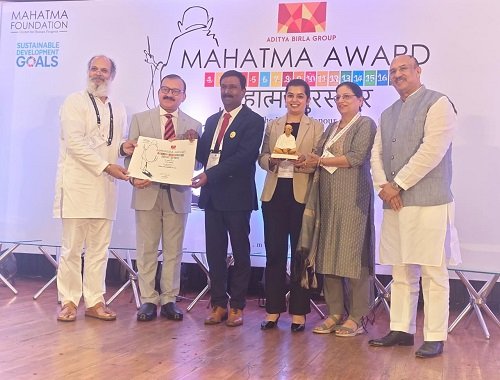
Dr Sayli Hedau
Ayurvedic Physician, Rastafari Wellness
Long working hours, sedentary routines, irregular meals and constant screen time are changing how people approach everyday health. Stress, poor sleep, low energy and digestive discomfort now often come up in the same conversations as metabolic and hormonal concerns such as Polycystic Ovary Syndrome (PCOS). As people begin to look at these concerns less in isolation and more as part of their overall lifestyle, interest is also returning to traditional approaches to everyday well-being.
That is bringing some old Ayurvedic ingredients back into focus. Vijaya, the Ayurvedic name for Cannabis sativa, is one of them. Cannabis has been part of Indian traditional medicine for at least 2,000 years, with references to the plant appearing in ancient Indian texts. Today, Vijaya is being revisited in a very different setting, where traditional knowledge is being considered alongside cannabinoid research and modern approaches to formulation.
From ancient knowledge to today’s lifestyle
Vijaya finds mention in ancient Indian literature as well as later Ayurvedic texts, where cannabis is mentioned in traditional preparations. Historical accounts describe its use in areas including digestion, pain and sleep.
The renewed interest comes at a time when these everyday concerns are difficult to separate. Someone spending most of the day at a desk may also be sleeping poorly, eating at irregular hours and dealing with work-related stress. For women with PCOS, lifestyle is an important part of the overall picture. International clinical guidelines recognise healthy eating, physical activity, emotional wellbeing and quality of life as important aspects of PCOS management, alongside medical care.
This does not mean Vijaya can treat PCOS or replace medical care. Its growing interest is better understood as part of a wider conversation around sleep, stress, movement, digestion and the way these factors come together in daily life.
Why Vijaya is being revisited
Vijaya is also being explored in combination with other Ayurvedic botanicals rather than necessarily being used on its own.
One such formulation brings together Vijaya with Ashwagandha, Jatamamsi, Vacha, Pippalimoola, Shunthi, Arjunatvak and Haritaki. Traditionally, these ingredients have been used for different purposes, including supporting relaxation, sleep, strength, recovery and digestion.
Ashwagandha, for instance, has a long history of use in Ayurveda for strength and resilience, while Jatamamsi has traditionally been associated with calming and sleep. Haritaki, Shunthi and Pippalimoola have been used in Ayurvedic digestive preparations.
The thinking behind such combinations is fairly straightforward. Sleep, stress, energy and digestion do not always exist as separate issues. A stressful period can disturb sleep, poor sleep can leave a person tired and less active, and irregular meals can then add to digestive discomfort.
Where modern science enters
There is another reason Vijaya has attracted attention in recent years: the growing scientific interest in cannabinoids and the endocannabinoid system, a biological signalling network involved in a range of bodily functions.
Cannabis sativa contains several cannabinoids, including THC and CBD, as well as other plant compounds. Research has examined cannabinoids in areas such as pain and sleep, although findings vary depending on the compound, formulation, dose and intended use. That distinction matters.
Traditional Vijaya preparations should not automatically be treated as equivalent to modern cannabis products or cannabinoid-based medical treatments.
What has changed is the way the plant is being examined. Alongside traditional descriptions and uses, researchers are looking at its chemistry, cannabinoid activity and ways of developing more consistent formulations.
An old ingredient, looked at through a new lens
For today’s wellness consumer, being traditional is no longer enough. There is greater interest in where an ingredient comes from, how it is processed, how much is being used and what testing or evidence supports its use. That is perhaps why an ingredient such as Vijaya is re-entering the conversation now.
Its history may stretch back around 2,000 years, but the questions being asked about it are distinctly current.
In a lifestyle defined by long hours at a desk, persistent stress, disrupted sleep and growing awareness of hormonal and metabolic health, traditional ingredients are being revisited with a different set of expectations. Vijaya’s story, therefore, is not simply about bringing an ancient botanical back. It is about how an ingredient rooted in Ayurveda is being reconsidered in a wellness market that wants tradition to be accompanied by formulation, safety and evidence.